F SG PropTalk (First Redesign)
Latest Posts

Property investment in Tokyo (and Japan): Some "good to know-s"

- August 17, 2014 2 Comments

The wife and I were at a Japanreal estate seminar organized by Sumitomo Realty and Development Co., Ltd yesterday.


Sumitomo Realty is one of the largest developer in Japan with over 400 years of history behind them. They are responsible for the first condominium development in Japanback in 1964 and had built more than 5,000 condo unit in 2013.  

Sumitomo is also one of the first Japanese developer that has started engaging foreign buyers. The wife and I always liken them as the "Far East Organisation" of Japan, both in terms of profile and pricing. 

Below are some "takeaways" from the seminar: 

Some useful information about buying a property in Japan 

  1. All residential properties in Japan are of freehold tenure. 

  1. Contrary to popular belief, there are no restriction on foreign purchases of residential properties. 

  1. Prices of apartments are based on nett usage area - you do not have to pay for the balcony and PES spaces. 

  1. Japan is still pretty much a non-speculative market - depending on how you look at it, this either mean better price stability or big potential upside in capital gains as more foreign participations enter the market. 

  1. Demand for apartments are increasing due to the growing population in the cities. More elderly, for example, are moving to live in the cities due to better access to amenities and healthcare. 

  1.  The Japanese are known for their strict building codes and standards, primarily because of the country's susceptibility to earthquakes.  

  1. Facilities (i.e. swimming pool, gym and sometimes even car-park lots) are uncommon in Japanese condominiums. 

  1. The toilets and bathrooms in a Japanese condo unit are mostly always separate. And a typical unit usually come with just one or maximum two toilets and only one bathroom. This is the case even for big units. 

  1. The "sinking fund" system is adopted by most condominiums. This is different and separate from the monthly maintenance payment, and involves an initial lump-sum payment (for new properties) plus a monthly payment subsequently. 

  1. The purchase of properties in Japan typically do not require the involvement of a lawyer. 

  1. Commission is payable by BOTH the buyer and seller to an agent for purchase of resale properties in Japan. The typical commission rate is 3% each.

Specifically for Tokyo

1.       Potential buyers are typically interested in properties within the 23 major wards. And the most prestigious (also = expensive) residential land are found in the Chyoda and Minato areas within Tokyo.

2.       Toyko currently has a population of about 13 million, which is approximately 10% of the total population in Japan.

3.       The number of foreigners living in Tokyo has increased from about 306,000 in 2001 to 390,000 in 2012.

4.       The Japanese government has designated special zones for Asian headquarters in various area within Tokyo. Generous incentives are provided to attract Asian companies to setup shop in these zones. The special zones are located in          

·         Area around Shinjuku Station

·         Area around Shibuya Station

·         Area around Shinagawa

·         Central Tokyo/Waterfront area

       So residential properties within these zones are especially in demand.

The different type of taxes applicable for property ownership

  1. Property Tax - This is approximately 1.7% of the "Appraisal Price" annually. The "Appraisal Price" is different from the purchase price  and much lower (i.e. similar to our "Annual Value").

  1. Acquisition Tax - This is similar to our stamp duty, calculated at 3% of the Appraisal Price. 

  1. Inheritance Tax - This is typically 10 - 15% of the total inheritance value, minus some basic deductions. Inheritance tax may not be applicable for most foreign purchases. 

  1. Capital Gains Tax (for non residents) - This is a hefty 30% of the total profit  for property sold within 5 years of purchase and reduced to 15% for property sold at/after 5 years of ownership. 

  1. Income Tax - As per Singapore, the income tax system is progressive in nature and starts at 5%. Rental derived are taxable as income even for non-residents.
General Note

  1. The main documents (S&P etc) that one needs to sign on are typically in Japanese. But the developer/marketing agent will provide translated copy for one to understand what he/she is signing for. 

  1. Payment for purchase is done in Japanese Yen. 

  1. It is mandatory to set up a bank account in Japan after purchase of property. This is to facilitate payment of maintenance and other fees, which will be deducted monthly from this account. 

  1. Registration of property is necessary for one to maintain all rights to the purchased property. 

  1. All relevant taxes must be paid else hefty penalties may be imposed.
 
 
The wife and I have been looking at the Tokyo residential market for the past year or so. Unlike UK or Australia, the Japanese private home market is still considered the "new kid on the block" when comes to foreign purchases and investments. Matter of fact, it is only up till recently that some of our local banks are willing to provide mortgage loans for foreign property purchases in Japan. The current financing quantum is up to 70% with loan tenor of up to 30 years. The current interest rate is slightly above 3%. 

Here are our takes on the "plus and minuses" of investing in a property in Tokyo (or Japan):

Plus

  1. The rental market is strong and stable - we were told that tenants generally prefer to stay put when they have found their "ideal rental home". And it is fairly easy to find tenants especially in the major wards. 

  1. The Yen is currently very low against the S$ - it was about 59 Yen to the S$ in 2012 and the exchange rate is currently at around 82! Many currency analysts are putting their monies on a Yen rebound in the near future. So it is probably a good time to buy, with a potentially high upside for forex gains when you sell the property in future.
     The wife and I only fully appreciate the extent of such gains when we started
     investing overseas - a 1 cent appreciation on S$ against another foreign currency
     for a S$100K sum automatically translates to an additional gain of S$1K!
 

  1. As long as the project is developed by one of the top-tier developers, the investment is generally safe. Investors are also protected by the local legal system in case of contract disputes.  

Minus

  1. We are not overly "excited" about the capital gain potential of Japanese properties. We were told that the real estate market especially in the Tokyo area have experienced strong revival over the past few years, but we are concerned about whether such recovery is sustainable and for how long. This is especially when we are seeing a deluge of new developments coming up all over Tokyo. So those seeking huge capital gains within say, 12 - 24 months, may not find the Japanese market too sexy. 

  1. Rental yields is currently a tad shy of 5% (gross) and around 3.5% (net). While stable, the yield is on the low side especially compared to Australia or UK.  

  1. The capital gains tax, even at 15% should one decides to hold on to the property for 5 years, is rather prohibitive.  

  1. The lack of Mainland Chinese interests in Japanese residential properties, due to political stand-off, may continue to stifle resale gains. Whether one choose to subscribe to the notion, it is generally true (at present) that wherever the Chinese buyers flock in doves, property prices there will generally shoot through the roof.

An for those who are interested, Sumitomo conduct regular property viewing tours of their new projects in Tokyo. The next tour is scheduled for September 12, 2014 (Friday). You will have to get to Tokyo at your own expense (of course). Sumitomo will designate a meeting point in the morning and bring you around to their various new properties. You will have to RSVP by Sep 3, 2014 to confirm a place for the Sep 12 tour. Do drop us an email if you require the necessary contact.
 
The wife and I hope the information above may be useful to those who are considering to purchase into the Japanese property market.


Details of properties that may feature in the tour:


Developers' housing sales: Another dismal month in July with worse expected in August!

- August 16, 2014 No Comments

Latest official statistics showed that developers' housing sales continued to languish last month, but the focus now is on the likely launches for the rest of the year and how much room developers have to price them attractively to get potential buyers into making a commitment.

Many developers paid high prices for 99-year private housing sites at state tenders in the past couple of years as they sought to replenish land following strong home sales at the time.

"Those with a high breakeven cost but who need to launch a project are likely to adopt a "Star Buy" strategy for inferior stacks of units in the development to draw out initial take-up to drive confidence in the launch," a seasoned developer told BT yesterday.

There will be heightened competition for buyers as more property launches are expected by developers who had bought residential land after December 2011. These developers are required to complete the projects and sell all units within five years, otherwise they would have to pay a hefty additional buyer's stamp duty on the land prices with interest, said Chia Siew Chuin, director at Colliers International.

Even amid weak July developers sales released yesterday by URA, evidence is surfacing of developers successfully drawing out buying demand through attractive prices, highlights SLP International executive director Nicholas Mak.

The number of new homes sold last month was about 10% more than the 434 units that went on the market, indicating that buyers could have been lured by price cuts to projects launched earlier.

"For instance, Wheelock released The Panorama in Ang Mo Kio in January this year, posting a median price of $1,343psf for sales in that month. But since it reduced prices in May to the $1,200-plus psf level (median price), this project has been among the top sellers every month," Mr Mak said.

"This goes to show that developers can revive sales at existing launches with meaningful price cuts. What remains to be seen, however, is whether this will result in a price war, which could be triggered, for instance, if one player were to sharply cut prices relative to other projects in the vicinity."

URA's July data also revealed that the remaining 37 units at The Vermont on Cairnhill, which was completed last year, were sold at $2,113psf median price in July. This is 8.6% below the $2,313psf median price, based on caveat data, for all previous sales in the project by its developer, said OrangeTee research head Christine Li.

"Vermont's brisk sales show many high-end buyers are on the sidelines waiting to enter the market once prices become attractive," she noted. "In the private housing market as a whole, a 10 - 12% price cut is typically enough to draw buyers in droves."

Developers sold just 484 private homes excluding ECs in July.  This was a paltry 0.4% higher than the 482 private condominium and apartment units moved in June - which was a 68% drop from May. In July last year, the figures was also 482 units.

There were only four new launches last month - of which three were in the city fringe. The city fringe also accounted for the lion's share of new sales last month, at 46%. The suburbs made up 36% and the city centre, 18%.

The top seller was City Gate on Beach Road, with 89 units transacted at a median price of $1,809psf. Near Kitchener Road, the developer of The Citron Residences found buyers for 23 units at $1,585psf median price. In the West Coast, 11 units were sold at Bijou at $1,969psf.

Analysts said last month's poor showing  was likely to drag on into this month.

"As the Hungry Ghost Festival falls in August this year, developers are generally expected to continue to hold back on their project launches," said Ms Chia of Colliers.

She expects new home sales to come in at between 200 and 500 units this month, before picking up again towards next month.
 

In the first seven months, developers sold 4,839 private homes and 354 EC units. For the whole of last year, the figures were 14,948 private homes and 3,588 ECs.

Some market observers expect genuine buyers to increasingly head for the resale market to pick up a completed property, including units in newly completed projects.

Source: BT, ST

EcoHouse: Brazilian government has no knowledge of nor dealing with the company!

- August 15, 2014 3 Comments

Hundreds of investors here, who ploughed millions of dollars into the hands of a developer claiming to be working with the Brazilian government on a social housing programme, were left fearing the worst after the Brazilian Embassy said on Thursday (Aug 14) that its government had no dealings with the company.

In fact, it was not even aware until recently, when complaints from Singapore investors mounted, that the United Kingdom-based company operated in Brazil.

EcoHouse, which has abruptly shut down its Suntec offices, is neither affiliated with the Brazilian national housing programme nor registered as a partner of its state-owned bank.
“In view of allegations by Singapore investors regarding EcoHouse Group, a company linked to executives in the UK, the Embassy of Brazil would like to state that the Embassy had no prior knowledge of the existence of EcoHouse’s operations in Brazil,” the embassy said in response to TODAY’s queries.


Some of the investors had approached the embassy. After contacting several agencies within the Brazilian government, the embassy found that there was “no record of any agreement with any company bearing the name ‘EcoHouse’ related to ‘Minha Casa, Minha Vida’ (Brazil’s national housing programme), or any other federal programme”.

The embassy added that “Bosque Residencial” in Natal, State of Rio Grande do Norte – one of the housing developments offered by EcoHouse for investment – is not listed in the records of Brazil’s state-owned bank, Caixa Economica Federal.

On its website, EcoHouse claims that it was chosen by the Brazilian government as “the only UK company to date officially authorised to build developments under Minha Casa, Minha Vida”, which aims to provide three million homes for the country’s growing middle class.

The company was founded in 2009 by Mr Anthony Armstrong Emery. Various media reports have put the number of Singapore investors in EcoHouse projects at between 800 and 1,500. Up to S$70 million had reportedly been ploughed into three housing projects.
Some investors have begun legal action against EcoHouse to recover their capital investments, which amounted to a minimum of £23,000 (S$47,810) per unit.

EcoHouse had promised a 20% fixed rate of return for a 12-month investment contract, but many investors said they have not received their returns or their capital despite their contracts reaching maturity.

The company was recently put on the Monetary Authority of Singapore’s (MAS) Investor Alert List, which lists unregulated companies that may have been wrongly perceived as being licensed or authorised by the MAS.

Reports have been filed against the company with the police and the Commercial Affairs Department (CAD). On whether EcoHouse is under probe, a CAD spokesman would only say: “It is inappropriate to comment on police investigations, if any.”

In response to TODAY’s queries sent on Tuesday, EcoHouse chief operations officer Deen Bissessar said on Thursday that the closure of its offices in Suntec Tower 2 was part of measures to “consolidate into our Brazil operation and managing global affairs from our global headquarters in London”.

He added that “the position remains unchanged” and the company is trying to “improve the situation with regard to construction and payments”.

“We absolutely remain committed to our clients and if that was not the case, we would simply shut all doors – which is something we have no intention of doing,” added Mr Bissessar. The company was unable to respond to queries about the Brazilian Embassy’s comments on Thursday by press time.

The developer’s registered address with the Accounting and Corporate Regulatory Authority is in Cecil Street. When TODAY visited the premises, it was occupied by a company called MC Corporate Services.

For companies regulated by the MAS, investors could seek redress at the Financial Industry Disputes Resolution Centre. However, such a recourse is not available for EcoHouse investors.

The Brazilian Embassy has urged potential investors considering putting their money in Brazil’s property market to carry out due diligence when they encounter any developers claiming to have projects supported by the Brazilian government.

Consumer watchdog CASE advised consumers to be mindful of the high risk involved when investing in overseas properties.

CASE executive director Seah Seng Choon pointed out that the laws in other countries are different from Singapore’s and investors may not enjoy the same degree of protection. “Seeking redress in the event of dispute can be cumbersome and in most cases consumers are not able to get their money back,” he said.
Source: CNA

Oh oh....


H1 Subsale study - interesting read!

- August 14, 2014 No Comments

In a study conducted by Ngee Ann Polytechnic, most subsales of private non-landed homes in 1H 2014 involved relatively long holding periods.

This may suggest that the seller's stamp duty (SSD) is effective in curbing speculative deals. Subsales are secondary-market transactions in uncompleted projects.


In the high-end segment, nearly all subsale caveats were traced to units that were bought in 2009 and 2010, when SSD was not implemented yet. There were no caveat lodged for units in the Core Central Region (CCR) that were previously bought in 2012 and 2013.

In the mass-market segment, 73% of subsale transactions involved properties that were bought in 2009 and 2010.

SSD was introduced in 2010 for residential properties bought on or after 20 Feb 2010 and flipped within a year. Later that year, SSD was extended to properties bought on or after 30 Aug 2010 and sold within 3 years. And since early 2011, the holding period has been extended to 4 years with sharply higher rates. Residential properties bought from 14 Jan 2011 and sold within 4 years incur SSD of 16, 12, 8 or 4% if they are sold in the first, second, third and fourth year of purchase respectively.

Given their long holding periods, most of the H1 subsale transactions were profitable, though the proportion of subsales that were in the black was higher in the mass-market segment, where prices have climbed at a faster clip from the Q2 2009 through.

75% of the 40 subsales in CCR made money. In the Outside Central Region (OCR), where mass-market homes are located, the proportion is 97%, out of 142 subsales.

Profit or loss was calculated by comparing the latest price against the price at which the unit had previously changed hands, factoring in the prevailing SSD rates (if applicable). However, other costs such as interest, legal fees and ABSD were not counted.

The URA data was further dissected to identify the biggest absolute quantum in terms of gain and loss, respectively, for subsale deals done in 1H 2014.


From the data compiled,  two conclusions are quite evident for at least the first half of this year:   

  1. Owners of units that are mainly in the suburban areas (OCR) fare much better in the subsale market than their counterparts with units in the prime districts (CCR), both in terms of % profit (much bigger) and % loss (much smaller). This seems to run contrary to our belief that properties in the prime districts are generally considered "good location buys" as they tend to retain their values better.  

  1. Buying a unit right in the heart of CBD may not necessarily be the "cash cow" that one originally perceived it to be.
 
However, the wife and I suspect that the above may just be a reflection on those who do not have the necessarily "holding power" to ride out the current property storm. It will be interesting to have the same sets of analysis done a year from now, when the impending deluge of new homes especially in the OCR region hits the market.


Singapore residential sales briefing Q2 2014

- August 13, 2014 No Comments

Following is a report by the good folks at Savills on the Singapore residential sales status in Q2 2014.


It provides a concise understanding of developments within the private residential market during the last quarter and its outlook.

The one thing that stands out for the wife and I when reading this is the rather massive pipeline supply figures of 83,633 units (as of end June 2014), of which 41.4% (34,643 units) remained unsold. And this is only private homes, excluding ECs!

Click on the link below to access the report:
http://www.scribd.com/doc/236666813/Savills-SG-Residential-Sales-Briefing-Q2-2014


The Panorama (Review)

- August 12, 2014 1 Comment

The wife and I were initially thinking about going to Citygate last Sunday. But a directional sign at the side of the road that read "Panorama" caught our eyes and being nearer anyway, we decided to head towards Ang Mo Kio instead.
 
The Panorama, for those who are unfamiliar, is the latest "once every decade outside of the prime central region" project developed by Wheelock Properties. Being primarily a developer of high-end residential developments in and around the Orchard area (Ardmore Park, Ardmore II, Grange Residences, just to name a few), it is said that Wheelock only roll-out properties outside of the central region once every 10 years - Parc Oasis in Jurong East (1994/95), The Seaview at Marine Parade (2004) and now The Panorama (2014), at Ang Mo Kio.

 
The sales gallery of ThePanorama is located at Ang Mo Kio Ave 8, directly across from Grandeur 8. You are unlikely to miss it if you are traveling down Ave 8 from Ang Mo Kio MRT station.  


However, the actual site of the project is at the junction of Ang Mo Kio Ave 2 and Ang Mo Kio St 13.


The Panorama was first launched back in January of this year. It was re-launched in May where prices were revised, and it became the second best-selling project in June.

The Panorama is a 99-year leasehold development consisting of 698 units. The project has a total of 6 towers  - four 17-storey blocks (12, 16, 18 and 20) and two 20-storey blocks (8 & 10).
 

There are 2 levels of basement parking available and a total of 704 lots. So it is basically 1-to-1 assuming each household owns a car. 

The Panorama offers unit types ranging from 1- to 5-bedroom as well as penthouses.


Facilities wise, these are spread within the grounds as well as on the roof top of each block. And from what we can see, there are enough varieties to cater to the interests of all residents. A couple of unique offerings include:

  • The arrival plaza and guard house, which is located in Basement 1. This is unlike the guard post that is normally found at the main entrance of most condominiums.  
 
  • The sky gym, which provides a panoramic view of the landed property across from Ang Mo Kio Ave 2 while you are running on the thread-mill. 
 
  • The Panorama Trail, which is supposedly an elevated walkway ala a mini version of the "tree-top walk".
The showflat that we wish to highlight is the 1,561sqft, 5-bedroom unit. There is only 1 stack of such within the whole development.


The first impression that the wife and I have when we stepped into the showflat is the unit "felt" bigger than the 1,500+sqft that it is supposed to be, considering that it houses 5 bedrooms (a master and junior suite to boot), both wet and dry kitchens, plus a rather huge balcony of almost 180sqft.


Having said that, something has to give to fit everything within the unit. The living and dining area, for example, is not particularly large.  Then again, it is not atypical of what we had seen in units of similar size at other developments either.  And lest anyone ask, the area does come with marble flooring.


Although the balcony area is larger than what we would have preferred, the regular (rectangular) shape means that it is functional at least - one can opt to push the dining table out here to cater for more than 6 people, which is the maximum number that you can probably fit into the dining area given the space limitation. The balcony may also come in handy for another purpose, which we will elaborate in due course. 

The wife and I liked the dry kitchen as it is "fully functional" - many dry kitchens are nothing more than an empty "island" that separates the dining area from the wet kitchen, with a fridge thrown in to add legitimacy. But in this case, the dry kitchen actually comes equipped with its own wash basin, hot-plate (for heating up food), an oven and of course the fridge. All kitchen appliances are provided by "Miele" (a supplier known for its high-end products) while the 2-door fridge is from "Whirlpool".


The wet kitchen is a tad small but still spacious enough for anyone who does regular heavy cooking to work within. However, there is no yard per se in this unit so your washing machine will need to vie for space with you in the wet kitchen. And on the same note, air-drying of clothes will probably be best done at the balcony (although the marketing agent did say that a retractable laundry hanging system may be installed to dry clothes).
 

The utility room will probably fit a small bed but this may need to be custom-made. It comes attached with a small bathroom, which is convenient if you intend to turn the utility room into a sleeping quarter for your domestic helper. 

The three common bedrooms are of the same size and typical of what you get in new developments these days. So a single bed is recommended but if necessary, you can still fit a queen-sized bed inside by lining the bed against the window. The bedroom floors are decked with engineered timber, which is quite appealing to the eyes.


The junior master bedroom is about twice the size of your common bedroom and is en suite.

 
The master bedroom is slightly larger (by about 55sqft) than the junior master and should comfortably fit a king-sized bed (and probably a TV console in front of the bed too). The amount of wardrobe provided is again typical of what you get these days - probably insufficient space for all the clothes that a couple posses. But they can always utilize the additional wardrobe space in the bedroom next door or alternatively, they can just keep to whatever clothing that they really need instead of having each design in every colour.
 
The 3 bathrooms (common, master and junior master) are all similar in look and style. All comes with homogenous-tile floors and walls, designer bathroom fittings from "Hansgrohe" and wall-mounted toilet system from "Geberit".


The one thing that caught our is that all the bathrooms are fitted with sliding doors, which we thought was an excellent space-saving idea compared to the swinging ones. We also liked the fact that the bathrooms only have standing showers (i.e. no bath tub), which again help to optimise space. However, those who enjoy "rain shower" will be somewhat disappointed.


Pricing wise, Wheelock has been releasing what they called "Star Buys" since the re-launch and we must say that the price point for The Panorama is very attractive compared to some of the other suburban projects, which are currently asking in excess of $1,300psf . 

For the 5-bedroom units, the "Star Buys" are units from the first to the fourth floor. As a comparison, the first floor unit is currently selling at $1.772 million ($1,135psf) while the fourth floor unit is going for $1.795 million ($1,150psf).  

And if you are looking for smaller units, there are also "Star Buy" units for the 3- and 4-bedders. And unlike the 5-bedrooms, there are several stacks that you can choose from. Both unit types are priced at slightly under $1,200psf for the lower-floor units (below 11 storey). 

For those looking at 3-bedroom units, the best stacks (our opinion) are #22 and #30. Both stacks are internal facing with full pool view.  

For those eyeing the 4-bedders, the best stacks are #9 (facing the landed homes across from AMK Ave 2, but may be a bit noisy especially with morning traffic) and #37 (inward facing with partial pool view). The two other stacks (#9 and #17) are facing outwards into some schools, which may not be as appealing. 

Maintenance wise, the monthly contribution for 3-bedders is $312 while the 4- and 5-bedroom units pay $364 per month.  

 
What we like:
  1. The "clean" layouts for not just the 5-bedders but also the smaller units as well, which make the units seem more spacious than its counterparts in other developments. 
  1. The location of The Panorama, which ensues good connectivity. Although the development is situated at the intersection of two roads, both AMK Ave 2 and AMK St 13 are not very busy roads, which means traffic volume and noise may not be much of a problem except during the morning. The Panorama is just a short drive to Upper Thomson Road or the CTE and for those who "train", the upcoming Mayflower MRT station along the Thomson Line is a mere 500m walk away.  
  1. As the project is built on elevated ground, many of the outward facing units, even those on lower floors, may enjoy unobstructed views.  
  1. Most importantly, the project is currently priced to sell. And given that it is developed by Wheelock, The Panorama is definitely value for money compared to other similar suburban projects.
 

What we do not quite like:

  1. Penthouses aside, the small wet kitchen and the lack of a proper yard to do laundry. Sunning of clothes in the balcony, while probably equally effective, may come across as unpleasing aesthetically. 

  1. With the utility room in the 5-bedroom unit, the area together with the attached bathroom is totally enclosed except for the entrance. So if your domestic helper is housed here, she will probably have to keep the door of the utility room open at all times for air circulation. And unless there is some kind of ventilation fan/outlet in the attached bathroom, the utility room (and subsequently the wet kitchen) may not smell very nice after awhile. So we are hoping that the developer will take this into consideration for the actual units. 

  1. Again with the 5-bedder, there are 2 sets of glass windows that make up a ceiling-to-floor panel within the master bathroom next to the standing shower. While we appreciate the need for ventilation, we reckon the top set of windows will suffice. This is especially when the bottom set cannot be opened anyway. But if the design is for aesthetic reasons, we hope that the developer will at least frost up the window panes for better privacy.  

  1. There is currently only 1 primary school that is within 1-km of The Panorama - CHIJ St Nicholas, which is an all-girls' school. There is another school compound next to the development that is currently occupied by Anderson Primary School. However, we understand that this school compound is a "holding facility" for schools that are undergoing refurbishment at their original sites. As such, we do not know for how long Anderson will remain at this location or which school (whether primary or secondary) will occupy it next.


Our parting shot

The Panorama is one project that the wife and I will definitely consider if we are looking for a new home or as investment. The location, project offerings and unit layouts are much to our liking. The attractive price point may mean a bigger potential upside for capital gains in future.


Tchau, EcoHouse?

- No Comments

The ST reported today that Brazilian property developer EcoHouse has closed its Singapore office. The move came shortly after the firm was put on the Singapore central bank's investor alert list just last month.
 
EcoHouse Group's office on the 42nd storey of Suntec Tower Two was opened with much fanfare in February of last year. The company builds social housing projects for former slum dwellers in Brazil.
 
The latest turn of events has left some of EcoHouse's investors in Singaporeworried about whether they will get the returns they were promised. This is after the Brazilian firm had netted millions from investors in Singapore by offering returns of about 20% after just one year, on investment sums as low as $46,000. However, several investors have claimed that they have not been paid despite their contracts having reached maturity.
 
Some Singapore investors in EcoHouse told ST on Friday last week that the firm had not informed them that it was closing its office here.
 
 
The wife and I did a quick search and found that news of the office closure was already reported in The PropertyGuru website some 4 days ago. In a statement released by Chief Operations Officer for EcoHouse Deen Bissessar:
 
"I can confirm that we have taken measures to consolidate into our Brazil operation and managing global affairs from our global headquarters in London.
 
This will not only help to reduce costs, but to fix administrative and communication issues.
 
Singapore investors should ideally view this as a further measure to improve the overall company position, thereby allowing us to complete our contracts with them faster.
 
Their contract is with Braziland the position remains unchanged. We are doing everything we can to improve the situation with regard to construction and payments."
 
In recent months there have been reports that unsatisfied investors have commenced legal action against EcoHouse for recovery of their capital investments along with promised returns. EcoHouse has previously denied it is in breach of any of its client contracts, although has admitted construction delays have resulted in delayed payments to its investors.
 
Bissessar added that EcoHouse remains committed to its clients. “If that was not the case we would simply shut all doors – which is something we have no intention of doing, he said.
 
He added that all client communications should be directed to sales.support@ecohousegroup.com where a member of the EcoHouse U.K. team will respond.
 
Now that the Singapore operation had suddenly shut its doors, allegedly without much of a notification to its clients, it does not reflect very well on the company's pledge of being "committed to its clients". It remains to be seen how responsive the email communication channel in the UK will be.
 
With this EcoHouse saga, the wife and I believe that the original intention of the project was genuine in nature and purpose. But along the way, it has morphed into a pyramid scheme of sorts. And the reason for the quick exit from Singapore is more due to the impending legal tussle that EcoHouse expects from disgruntled local investors and less because of consolidation. But that's our humble "layman" opinion as per always...


Click on link below to read our previous post on EchoHouse:


July rental: Volume up, Price down to 38-month low!

- August 11, 2014 1 Comment

According to data from SRX, the number of full units rented out in July was 3,360 - representing a 5.3% on-month hike. Year-on-year, rental volume improved by 9% from the 3,082 contracts signed in July 2013.

Rental prices went down, though, slipping 0.8% from the previous month. It is a 38-month low since May 2011, SRX added.

The decline was greatest in the Rest of Central Region at 1.4%, while Core Central Region dipped 1.1%. Prices for Outside Central Region improved slightly by 0.3%.

Source: CNA


July resale prices fell again...to 21-month low!

- No Comments

The resale prices for non-landed private homes continued its downward trend in July, falling 1.3% month-on-month, according to flash estimates from the Singapore Real Estate Exchange (SRX) on Monday (Aug 11).

The decline represented a 21-month low since October 2012, SRX said, and the fall in prices were felt in all three regions. Prices for the Core Central Region fell the most with 4% , while Rest of Central Region and Outside Central Region dropped 1.1% and 0.6%, respectively.

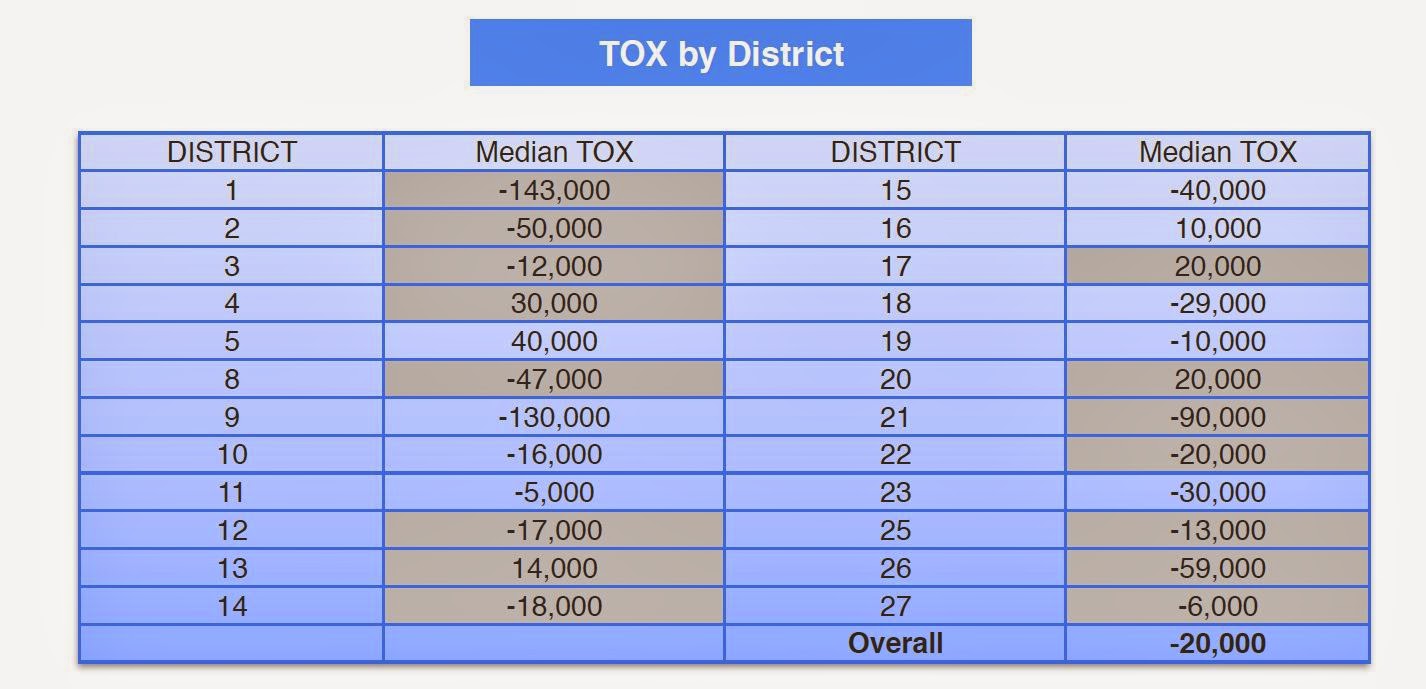
The median Transaction Over X-value (TOX) for the majority of districts - 18 out of 24 - was negative in July. For districts with more than 10 resale transactions, districts 9 (Orchard, Cairnhill, River Valley), 15 (Katong, Joo Chiat, Amber Road) and 23 (Bukit Panjang, Choa Chu Kang) saw the most negative median TOX at -S$130,000, -S$40,000 and -S$30,000, respectively.

This means that majority of the non-landed private property buyers last month in these districts purchased their units below what other buyers who came before them paid for in similar units, SRX said.

Conversely, districts 5 (Pasir Panjang, Clementi) and 16 (Bedok, Upper East Coast) posted positive TOX values of S$40,000 and S$10,000, respectively.

In terms of resale volume, there were an estimated 431 transactions in July, compared with 427 in June. The volume dropped 20.5% from the same month last year, SRX said.

Source: CNA